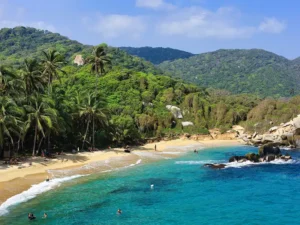
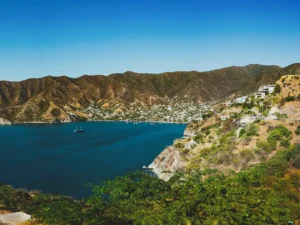
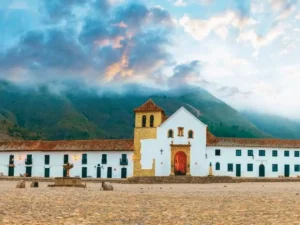
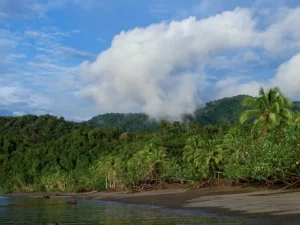
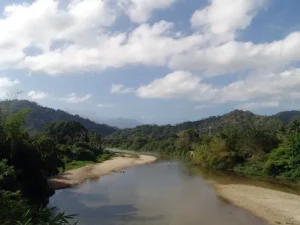
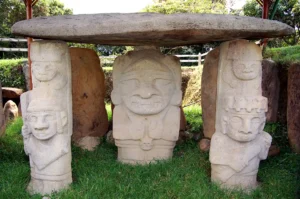
Tayrona National Park is located on the Colombian Caribbean coast near Santa Marta, where the Sierra Nevada de Santa Marta meets the sea in a dramatic fusion of mountains and coast. The park extends from Taganga Bay, a small fishing village, to the point where the Piedras River flows into the Caribbean. Covering approximately 150 square kilometers of land and 30 square kilometers of maritime territory, Tayrona is one of the most biodiverse protected areas in Colombia. The climate is tropical and humid, with average temperatures between 25°C and 30°C throughout the year.
One of the main entrances is located about 34 kilometers from Santa Marta. From here, visitors can explore natural beaches, coral reefs, mangroves, coastal lagoons, tropical rainforest, and mountainous terrain covered in lush vegetation. The park is home to around 108 species of mammals, including howler monkeys, spider monkeys, jaguars, pumas, ocelots, and various bat species. Birdwatchers can enjoy over 300 species of birds, such as military macaws and colorful tropical species. Additionally, Tayrona hosts 31 species of reptiles, 15 amphibians, and numerous marine organisms, including sea turtles, fish, corals, and crustaceans.
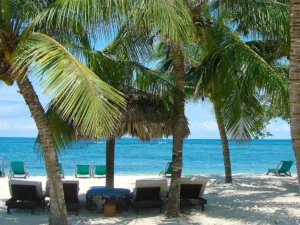
Its most famous beaches include Arrecifes, La Piscina, Cabo de San Juan del Guía, and Castilletes, all accessible from the Cañaveral sector via well-marked trails that pass through dense jungle and scenic viewpoints.

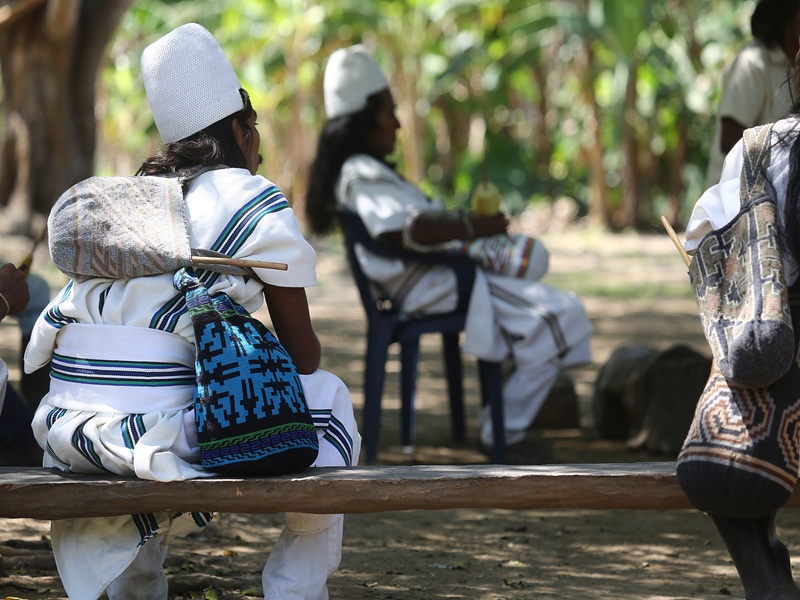
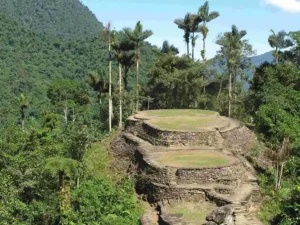
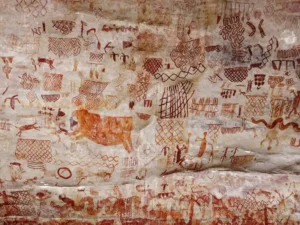
Beyond its natural beauty, Tayrona National Park has deep cultural significance. It lies within the ancestral territory of the Indigenous peoples of the Sierra Nevada, particularly the Kogui, descendants of the ancient Tayrona civilization that inhabited the region for thousands of years. Through the Tayku Indigenous community, visitors can learn about the Kogui worldview, traditions, and spiritual relationship with nature, where the Sierra Nevada is considered the “Heart of the World.” This encounter allows travelers to connect not only with extraordinary landscapes but also with Colombia’s ancestral culture, enriching the experience with both biodiversity and living heritage.