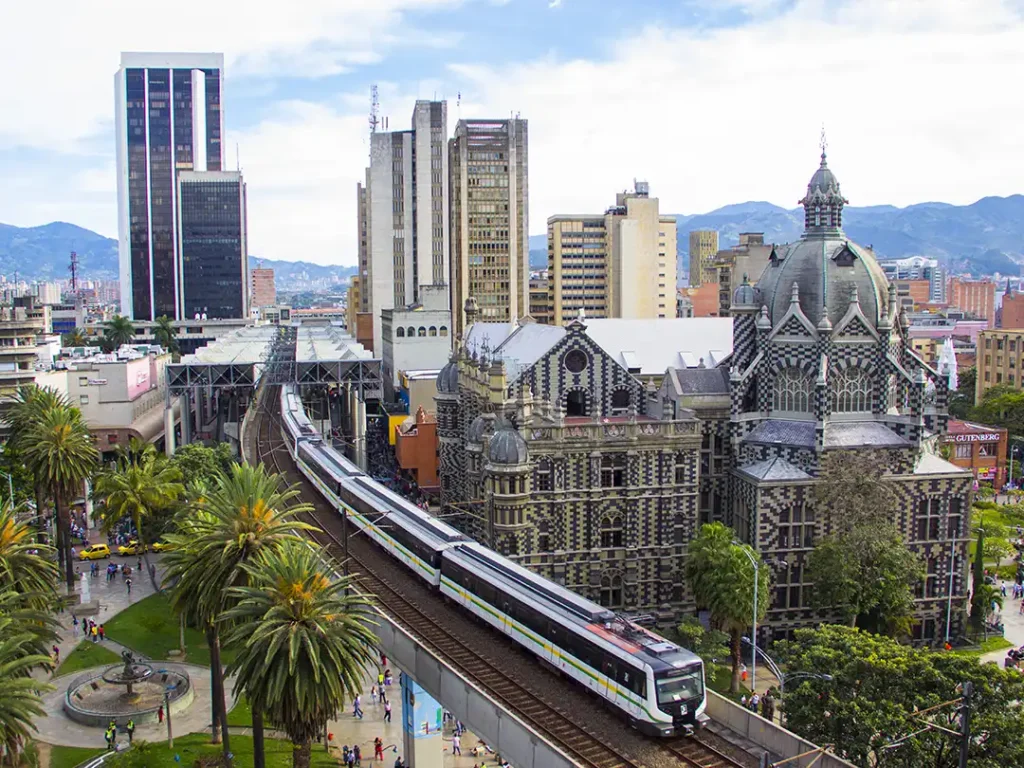
Medellín, the capital of Antioquia, lies in the fertile Aburrá Valley in the Central Andes. Known as the “City of Eternal Spring” for its pleasant year-round temperature of around 20°C, the city was founded in 1675 as “Villa de Nuestra Señora de la Candelaria de Medellín.”
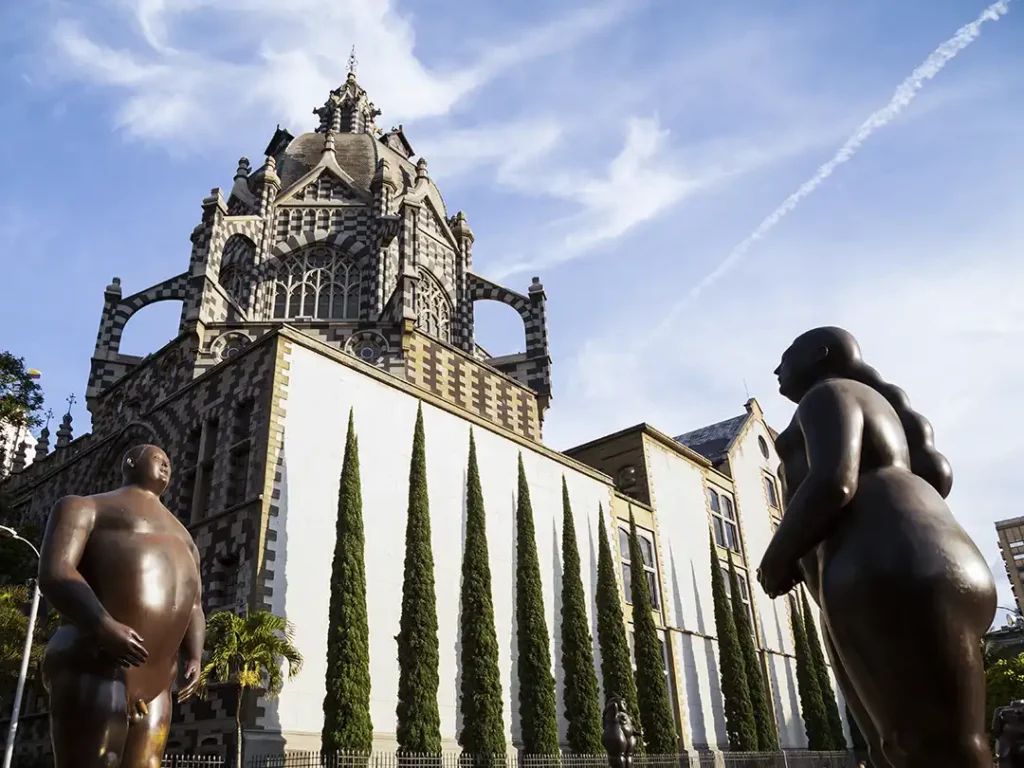
After the creation of the National Federation of Coffee Growers in 1927, Medellín experienced significant economic growth fueled by the coffee boom. Since then, it has transformed thanks to the creativity and perseverance of its people, becoming a cultural hub for journalism, literature, urban planning, and the arts. In this last field, the works of the renowned Fernando Botero stand out, many of which can be admired both at the Museum of Antioquia and in Botero Square.
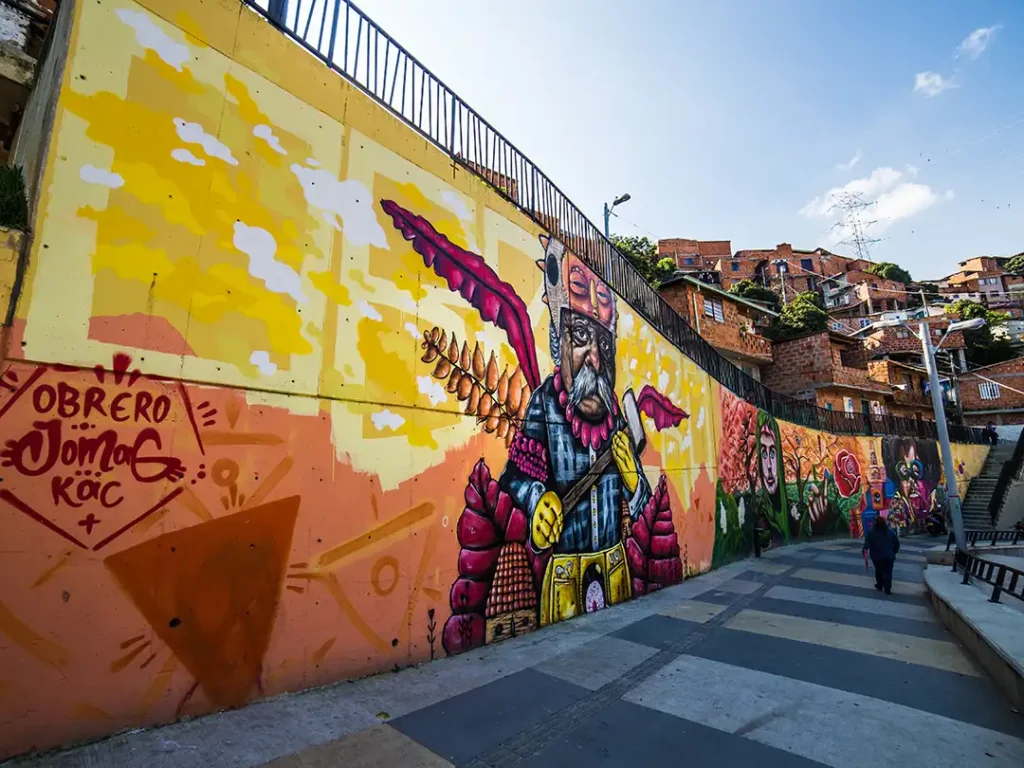
For years, Medellín was considered one of the most dangerous cities in the world, deeply affected by drug cartels such as Pablo Escobar’s. Today, however, it has become a global symbol of social transformation. The city is made up of 16 comunas, each with its own story of resilience and creativity. Manrique (Comuna 3) is known for its vibrant street life and murals; Moravia (Comuna 4), once a landfill, has turned into a lively neighborhood filled with gardens and cultural spaces; while Comuna 13 has gained international recognition for its outdoor escalators, street art, and cultural vitality. Complementing this transformation is the Memory House Museum, a space dedicated to understanding the country’s recent past and honoring the voices of those affected by conflict.
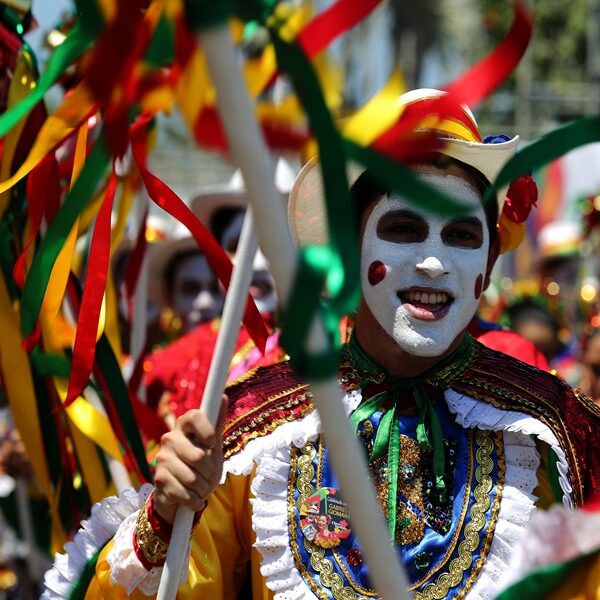
Medellín becomes even more vibrant during the Flower Festival, held every year between July and August. Highlights include exhibitions of orchids, birds, and flowers, the traditional Silleteros Parade, where participants carry floral arrangements weighing up to 60 kilograms, and the Cavalcade, recognized by Guinness World Records for gathering more than 10,000 riders.

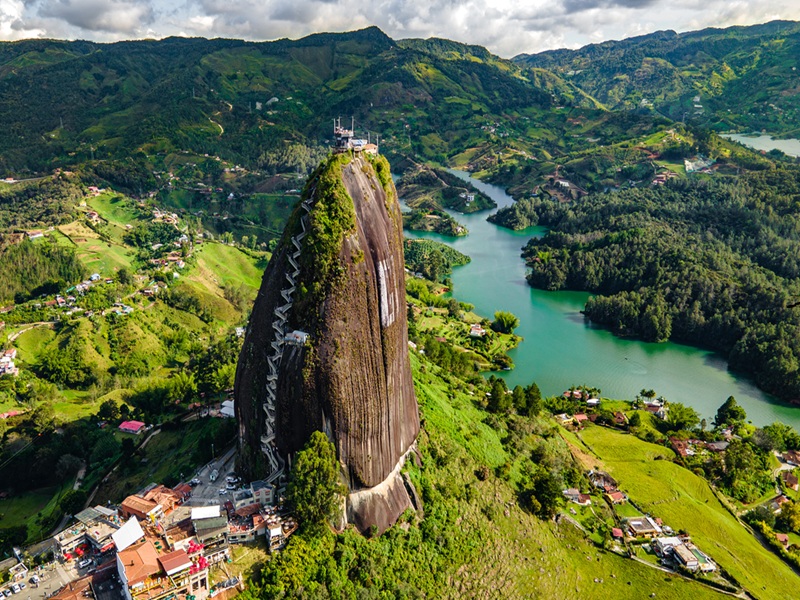
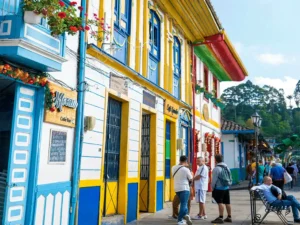
Just outside the city lies Guatapé, famous for its brightly painted houses and the imposing Rock of El Peñol, a monolith rising over 200 meters high that offers one of the most breathtaking panoramic views in Colombia. In the eastern region of Antioquia, towns like El Carmen de Viboral, Marinilla, and La Ceja showcase the richness of local culture: El Carmen is the cradle of traditional pottery, reflected in its workshops and ceramic murals; Marinilla blends gastronomy, music, and religious heritage; while La Ceja is known for its vast flower plantations, many of them destined for export, some open to visitors, and for the bicycle, which remains the most common form of transport for its residents.
Just outside the city lies Guatapé, famous for its brightly painted houses and the imposing Rock of El Peñol, a monolith rising over 200 meters high that offers one of the most breathtaking panoramic views in Colombia. In the eastern region of Antioquia, towns like El Carmen de Viboral, Marinilla, and La Ceja showcase the richness of local culture: El Carmen is the cradle of traditional pottery, reflected in its workshops and ceramic murals; Marinilla blends gastronomy, music, and religious heritage; while La Ceja is known for its vast flower plantations, many of them destined for export, some open to visitors, and for the bicycle, which remains the most common form of transport for its residents.
Get Inspired
Sophisticated colombia: an elevated cultural experience

Exploring Colombia’s nature treasures